

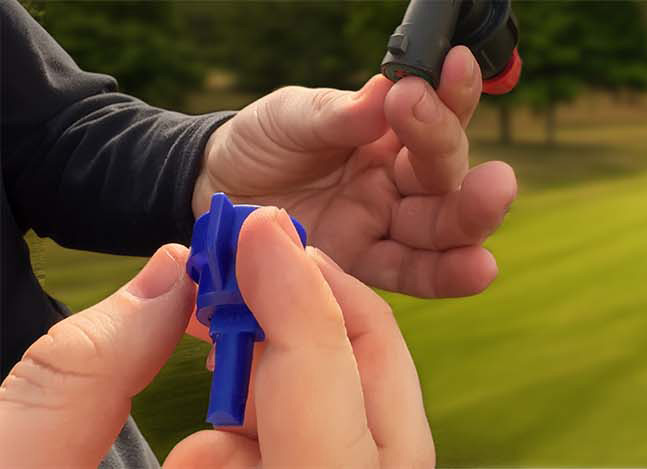
The right nozzle can make a big difference to spray coverage, application accuracy and drift control. But even the correct nozzle will only perform properly if the rest of the spraying system is working as it should.
Use this quick checklist to make sure your nozzles are suitable for the job and performing consistently.
1. Is the nozzle right for the application?
Different applications require different spray patterns, flow rates and droplet sizes.
Check that the nozzle you are using is suitable for the product being applied, the target area and the type of spraying you are carrying out.
2. Check the spray pattern
Run the sprayer with clean water and inspect the pattern from each nozzle.
Look for:
Uneven or distorted spray patterns
Streaks or gaps in coverage
Nozzles spraying at a noticeably different angle
Poor overlap between neighbouring nozzles
An inconsistent pattern may indicate a worn, damaged or partially blocked nozzle.
3. Compare nozzle output
Nozzles across the boom should deliver a consistent flow rate.
Collect the output from each nozzle for the same amount of time and compare the results. A nozzle delivering noticeably more or less than the others should be investigated.
Differences in output can be caused by nozzle wear, blockages or problems elsewhere in the spray system.
4. Check for wear and damage
Nozzles are wearing components and their output can gradually increase as the orifice wears.
Inspect them regularly for:
Physical damage
Worn openings
Cracks
Distortion
Chemical deposits
If one nozzle is worn, it may be worth checking the complete set.
5. Check filters and strainers
Restricted flow is not always caused by the nozzle itself.
Inspect nozzle filters, line filters and strainers for dirt or debris. Cleaning these regularly can help maintain consistent pressure and flow across the sprayer.
6. Check your operating pressure
Make sure the sprayer is operating within the recommended pressure range for the nozzle.
Too much or too little pressure can alter the flow rate, spray pattern and droplet size, potentially increasing drift or reducing coverage.
7. Check nozzle position and alignment
Make sure each nozzle is correctly fitted and pointing in the right direction.
On boom sprayers, nozzle spacing, angle and boom height all contribute to achieving the correct overlap and even coverage across the full working width.
8. Make sure nozzles match
Avoid mixing different nozzle types, sizes or significantly different levels of wear across the same boom unless the application specifically requires it.
A consistent set of nozzles helps maintain an even application rate across the machine.
9. Calibrate your sprayer
Even when everything appears to be working correctly, calibration is the best way to confirm that the sprayer is applying the intended amount.
Check forward speed, operating pressure, nozzle output and working width before spraying.
Something doesn't look right?
An uneven spray pattern or inconsistent nozzle output does not necessarily mean the nozzle is at fault.
Pressure regulators, pumps, filters, pipework and other components can all affect spray performance, so investigate the complete system if problems continue.
Need a replacement nozzle?
We stock a range of spray nozzles for different applications, spray patterns and flow requirements.
Explore our nozzle range and find the right option for your sprayer.